Resource Quality Before Scale
Assess the characteristics of the underlying asset, its recoverability or productive potential, and the evidence supporting its economic value.
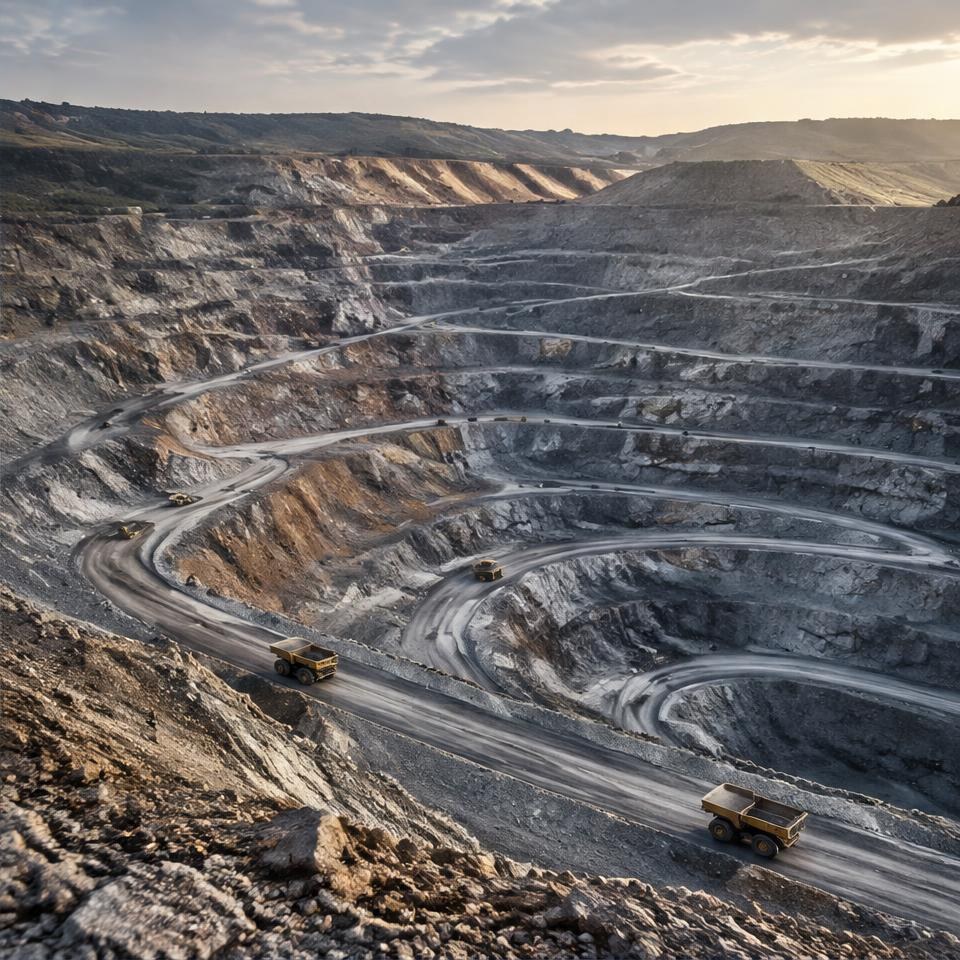
Capital at the Foundation of the Global Economy.
Investing in the resources, productive assets and supply chains that sustain economic activity.
The Economics Beneath the Surface
Every economy depends on the availability of essential resources. Energy, metals, minerals, agricultural commodities and productive land underpin industrial development, technological progress and the daily functioning of global markets.
SpetsGroup Natural Resources evaluates investment opportunities across these foundational sectors, combining asset-level analysis, commercial discipline and a long-term perspective on resource economics.
Our approach considers not only what a resource is worth today, but what determines its value over time: quality, accessibility, production costs, infrastructure, market demand, jurisdiction and the capital required to bring productive capacity into operation.
Natural resource investments are shaped by factors that extend well beyond prevailing commodity prices. Geological characteristics, extraction costs, operating efficiency, transportation, permitting, capital intensity and market access can determine whether a resource becomes a durable economic asset.
Our analysis begins with the fundamentals of the underlying opportunity. We examine the quality and availability of the resource, the economics of production, the commercial environment and the operational requirements necessary to develop or sustain productive capacity.
Assess the characteristics of the underlying asset, its recoverability or productive potential, and the evidence supporting its economic value.
Evaluate production costs, capital requirements, pricing assumptions and downside scenarios across different market conditions.
Consider the capabilities, governance, operating discipline and investment horizon required to develop, maintain and responsibly manage resource-based assets.
The objective is to identify opportunities supported by credible underlying economics—not simply exposure to rising commodity prices.
Areas of Focus
01
Investment opportunities associated with conventional energy resources and the assets that support their production and development. Evaluation may include reserves, production economics, operating requirements, market access, infrastructure dependencies and the implications of changing energy demand.
02
Exposure to selected metals and mineral resources supporting industrial production, construction, electrification and advanced manufacturing. Analysis considers geological quality, reserves and resources, extraction costs, processing requirements, jurisdictional conditions and the capital needed to sustain operations.
03
Assessment of resources that may play an important role in industrial supply chains, advanced technologies and strategic manufacturing. Particular attention is given to supply concentration, processing capacity, substitution risks, permitting, geopolitical exposure and the time required to develop alternative sources of supply.
04
Investment opportunities connected to agricultural production, productive land and selected assets within the agricultural value chain. Relevant considerations include soil quality, water availability, productivity, crop economics, logistics, operating capabilities and exposure to weather and market volatility.
05
Selected investments involving sustainably managed forestry, timber production and other renewable biological resources, where the underlying asset, management practices and ownership rights can be adequately assessed. Evaluation may include growth cycles, land tenure, biodiversity considerations, fire exposure and the economics of harvesting and renewal.
06
Opportunities involving the processing, refining, storage and commercialization of natural resources where these activities are integral to the underlying investment thesis. We assess the economics of converting raw resources into marketable products, including processing capacity, energy requirements, transportation and customer access.
Each opportunity is assessed on its individual merits. Sector relevance alone does not establish investment attractiveness, and resource scarcity does not automatically translate into economic returns.
From Resource to Realized Value
The value of a natural resource depends on more than its presence in the ground or its potential yield from productive land. It depends on whether the resource can be developed, processed, transported and sold under commercially viable conditions.
Our investment assessment considers the stages connecting the underlying resource to its economic realization.
01
Examine available geological, technical, agricultural or other specialist evidence concerning the asset's characteristics, quality and productive potential.
02
Evaluate development expenditure, operating costs, required equipment, labor, energy, water, permitting and the time needed to reach productive operation.
03
Assess transportation, processing, storage, export routes, contractual arrangements and access to relevant end markets.
04
Determine the capital requirements, financing alternatives, ownership considerations and allocation of operational and financial risks.
05
Evaluate the management team, technical expertise, operating systems, maintenance requirements and governance needed to sustain productive performance.
06
Monitor production, costs, resource depletion or renewal, market conditions, regulatory developments and the continued validity of the original investment thesis.
The purpose of this analysis is to understand where value is created, where it can be lost and which conditions must hold for an investment to remain economically viable.
Investment Across the Resource Lifecycle
Natural resource opportunities can emerge at multiple stages of an asset's lifecycle, each with a distinct risk profile and capital requirement.
Opportunities involving resource discovery, technical evaluation and the advancement of promising assets. These investments can carry substantial geological, permitting, financing and development risk.
Capital deployed to establish productive capacity, build processing capabilities or prepare assets for commercial operation. Outcomes depend on execution, cost control, technical performance and access to financing and infrastructure.
Investments in established operations with observable production, operating costs and commercial relationships. Even mature assets remain exposed to commodity cycles, operational disruption, resource depletion and changing market conditions.
Capital directed toward increasing capacity, improving recovery rates, modernizing operations or extending the productive life of an asset.
Opportunities involving acquisitions, divestitures, partnerships and portfolio realignment where scale, operating capabilities or complementary assets may support a stronger economic position.
Not every stage is appropriate for every mandate. The level of development risk, required expertise, capital commitment and expected holding period must align with the investment strategy.
Capital Discipline Across Commodity Cycles
Natural resource markets can experience substantial price fluctuations driven by supply and demand, technological change, geopolitical developments, trade restrictions, inventory levels and shifts in industrial activity.
A disciplined investment approach must account for the possibility that market conditions will change before an asset reaches its intended operating capacity or investment horizon.
We therefore consider:
Where appropriate, investment cases are tested against multiple operating and market scenarios rather than a single expected price path.
The objective is to understand the resilience of the underlying economics, recognize the limits of available information and avoid relying on favorable market conditions as the sole basis for value creation.
Responsible Resource Ownership
Natural resources are connected to land, water, ecosystems, communities and the long-term economic interests of the jurisdictions in which they are developed.
Their responsible management is therefore an integral consideration in evaluating an investment—not a substitute for sound economics or effective governance.
Depending on the asset and jurisdiction, our assessment may consider:
The relevance and materiality of these considerations vary across sectors. They must be evaluated in the context of the specific asset, its operating environment and the applicable legal framework.
Resource efficiency, emissions, waste, water use, rehabilitation obligations and the management of material environmental exposures.
The legal basis for ownership or operating rights, land access, stakeholder relationships and relevant community impacts.
Regulatory compliance, anti-corruption controls, supply-chain integrity, transparency and the quality of operational oversight.
Exposure to technological substitution, changes in demand, evolving regulation and the potential effects of energy and industrial transitions on long-term asset economics.
The costs and obligations associated with mine closure, land rehabilitation, decommissioning or the renewal of biological resources, as applicable.
Intelligence in Service of Investment Judgment
Natural resource investments often require the integration of complex technical, commercial, financial and geographic information.
Through Aletheia, SpetsGroup's Group Intelligence & Operating Platform, relevant research, market data, operational indicators and risk analysis can support the evaluation and ongoing oversight of resource-based investments.
Depending on the mandate, this may include monitoring commodity markets, organizing operating information, assessing scenario assumptions and supporting the review of asset performance and emerging risks.
Analytical tools complement specialist expertise. They do not replace geological verification, engineering judgment, independent technical assessments or direct evaluation of operating conditions.
Intelligence informs. Judgment decides. Governance safeguards.
Natural Resources Within a Broader Capital Strategy
Natural resources intersect with several of the investment capabilities within SpetsGroup Capital.
These connections can create opportunities for coordinated analysis and capital deployment while preserving the distinct investment thesis and risk assessment required for each asset.
Our approach is to evaluate the opportunity as a whole, identify the capabilities it requires and select an investment structure consistent with the mandate.
Ownership capital for resource businesses and operating platforms.
Financing needs associated with assets, operators and development programs.
Energy transport, processing and resource-related infrastructure.
Productive land and property-intensive resource assets.
Natural resources remain fundamental to industrial capacity, economic development and the functioning of global supply chains. Their investment potential, however, depends on the quality of the asset, the discipline of its development and the conditions under which its value can be realized.
SpetsGroup Natural Resources approaches these opportunities through rigorous analysis, considered ownership and a long-term perspective on productive value.
Discover the broader investment capabilities of SpetsGroup.
Contact our team to discuss natural resource investments, strategic opportunities and resource-related capital requirements.
Important InformationNatural resource investments can involve substantial risks, including commodity price volatility, geological or production uncertainty, operational disruption, environmental liabilities, permitting delays, political and regulatory changes, currency exposure, illiquidity and the potential loss of invested capital. Early-stage development and exploration investments may fail to achieve commercial production. Resource estimates and projections are subject to technical, economic and other uncertainties. Environmental, social and governance considerations vary by asset, sector and jurisdiction and do not eliminate investment risk. Any investment, advisory or transaction activity is subject to applicable law, relevant authorizations, due diligence and the terms of the specific mandate. Nothing on this page constitutes an offer, recommendation or guarantee of investment performance.